
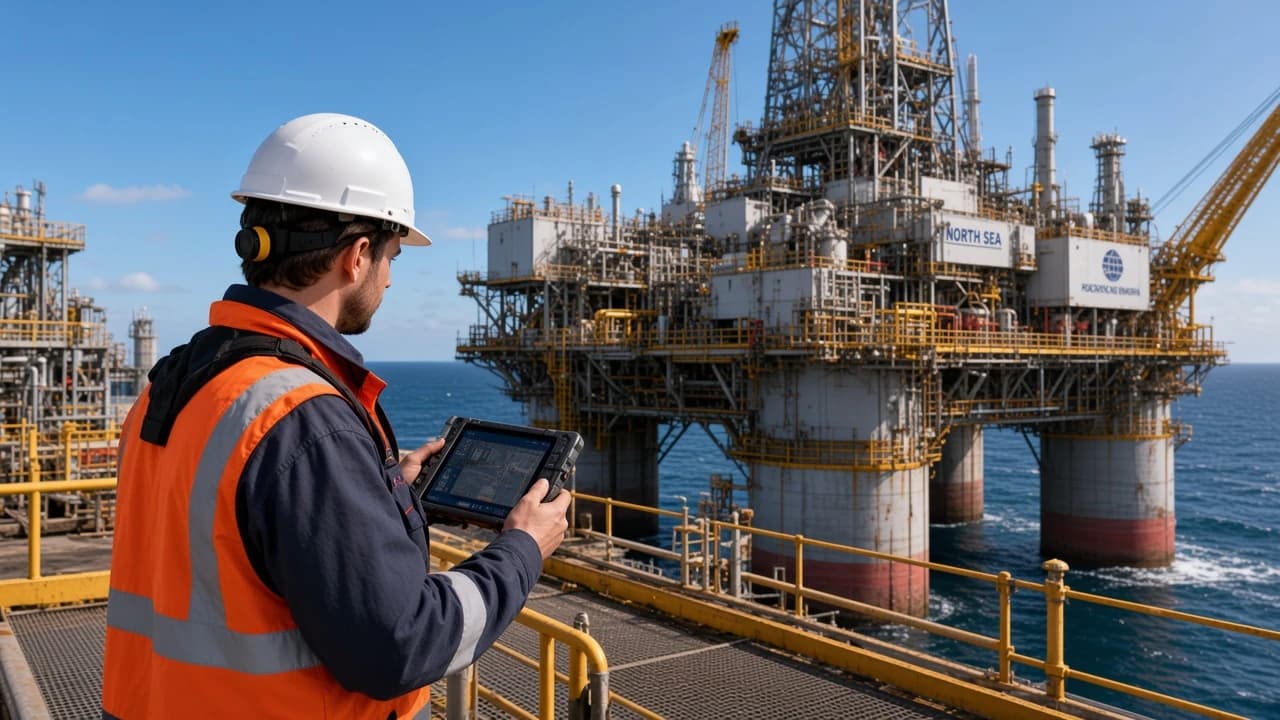
Drone inspection
On site · crew
“Malaki ang pinsala sa haligi sa ilalim ng kreyn.”
Tagalog — significant damage to the column under the crane.

Why we are building ConnectPoint
A collision in the North Sea, and everything that was never kept.
I was there — 21 March 1997
Deepsea Trym · North Sea, well 25/10-8 · the supply vessel “Viking Boy” struck the rig
Photo reconstruction · Aker H-3 type
Part 1 — What the archives hold
Rig
Deepsea Trym (Odfjell Drilling), IMO 8752271
 Reconstruction · Aker H-3
The prospect is named Hanz. One year earlier — almost to the day — the same supply vessel had towed Deepsea Trym across the Atlantic from Tampico, Mexico, arriving in Norway on 22 March 1996.
One year and one day later, the two met again. This time not by plan.
Petroleum Safety Authority Norway — record snippet
970321 Deepsea Trym semi | Viking Boy supply 1500 1978 | aft | human error
Seven fields. Date, rig, vessel, size, year built, where it struck, and why.
The well flowed oil on test but was plugged and abandoned on 7 April 1997. The next well was not started until 29 April.
Twenty-two days sit between them that the archives do not account for.
Part 2 — What is written nowhere
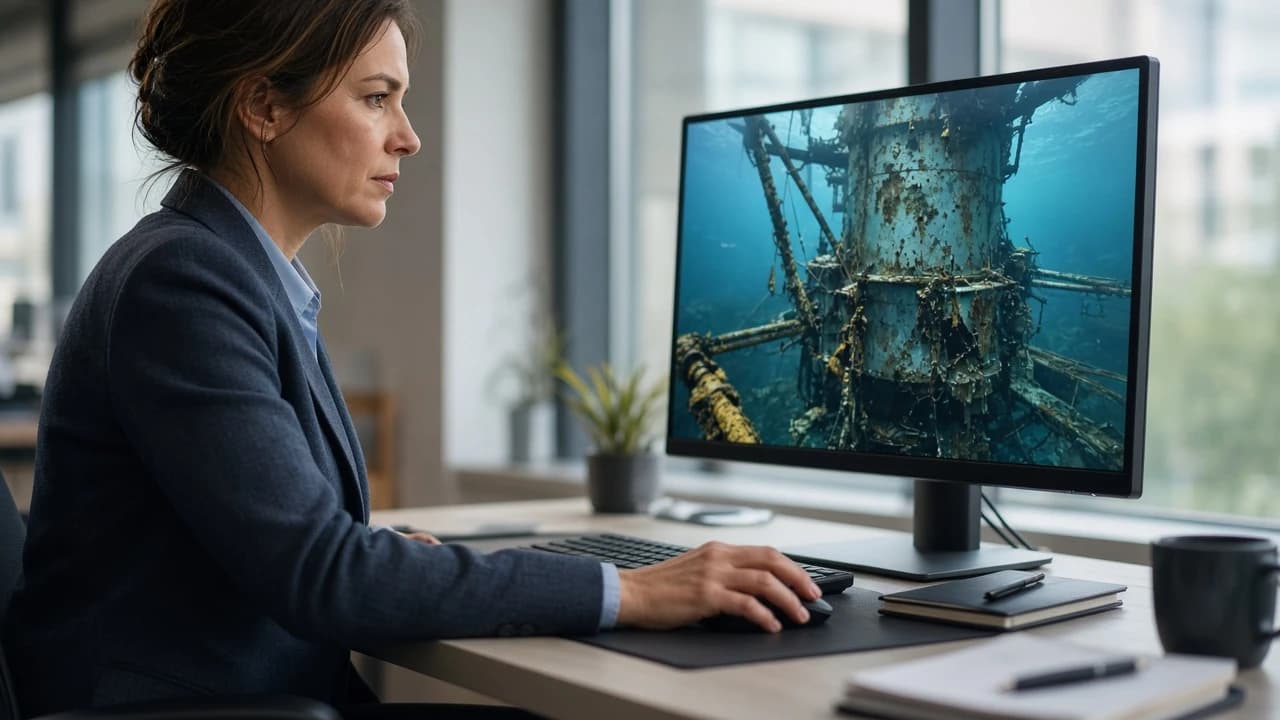
The strike was on the column under the crane. The supply vessel was stern-to the rig — which matches the official record that it struck aft.
Drilling stopped. Not for a patch. For 100% repairs. Significant downtime followed.
Then comes the other part — the part that happens after every accident at sea. The people on the rig and the people sitting onshore begin to pull in different directions. Who is responsible? What can still be done? The operator wants the bit turning. The contractor wants the same. If it stops, it is because somebody said something. The owner lives off uptime. The insurer wants documentation. Think of all the hours of lawyers and paperwork that followed.
And somewhere in the system it says “human error”. That means somebody got a stamp. Who was he? What is he sitting there thinking today, twenty-nine years on?
Nobody was hurt. There was no spill, as far as I remember. But there could have been.
All that remains of that day is one row in a spreadsheet. No column for damage. No column for downtime. No column for cost. No column for who decided what.
Part 3 — Why ConnectPoint exists
What happened on 21 March 1997 still happens. Vessels strike installations. Damage has to be assessed. Someone onshore has to make a decision based on what someone on board tells them — and “what someone tells them” is not evidence. It is a claim with a signature under it.
ConnectPoint turns that into something else: a recording from the site, with time, place and identity bound to it, unchallengeable afterwards. Owner, class society and insurer see the same thing at the same time. The decision is made on what actually is, not on how convincing someone sounds on the phone.
What it would look like today
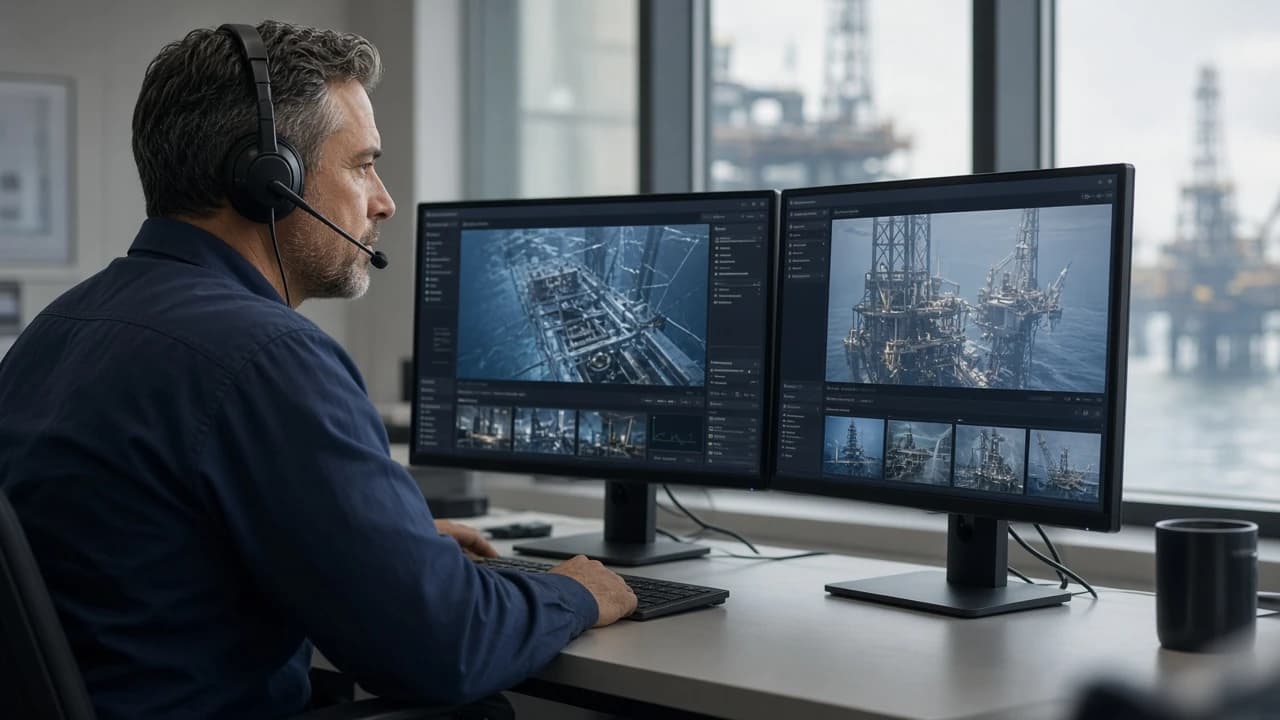
A modern inspection concept — built on a personal account from 1997. The column below the crane, seen at once by the crew, the rig owner, the oil company, the class society and the insurer.
Drone inspection
On site · crew
“Malaki ang pinsala sa haligi sa ilalim ng kreyn.”
Tagalog — significant damage to the column under the crane.
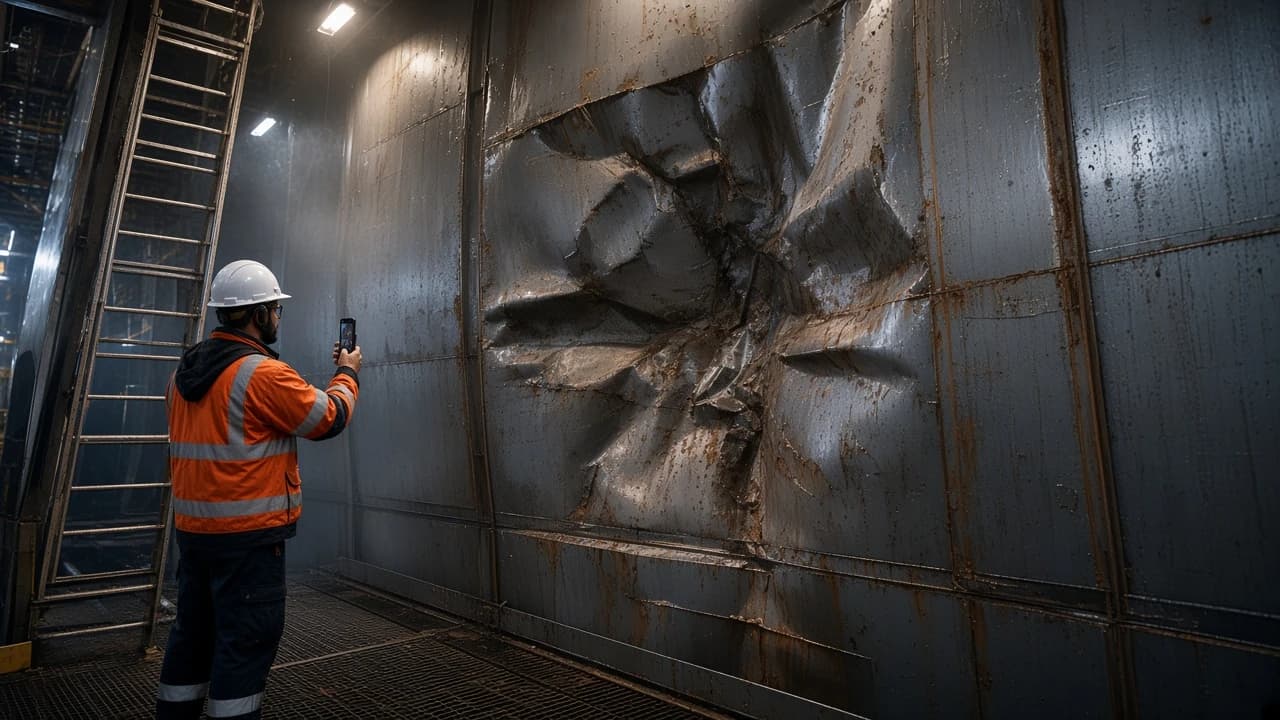
Inside the column
On site · crew
“Hindi pinapasok ng tubig ang haligi.”
Tagalog — water is not entering the column.
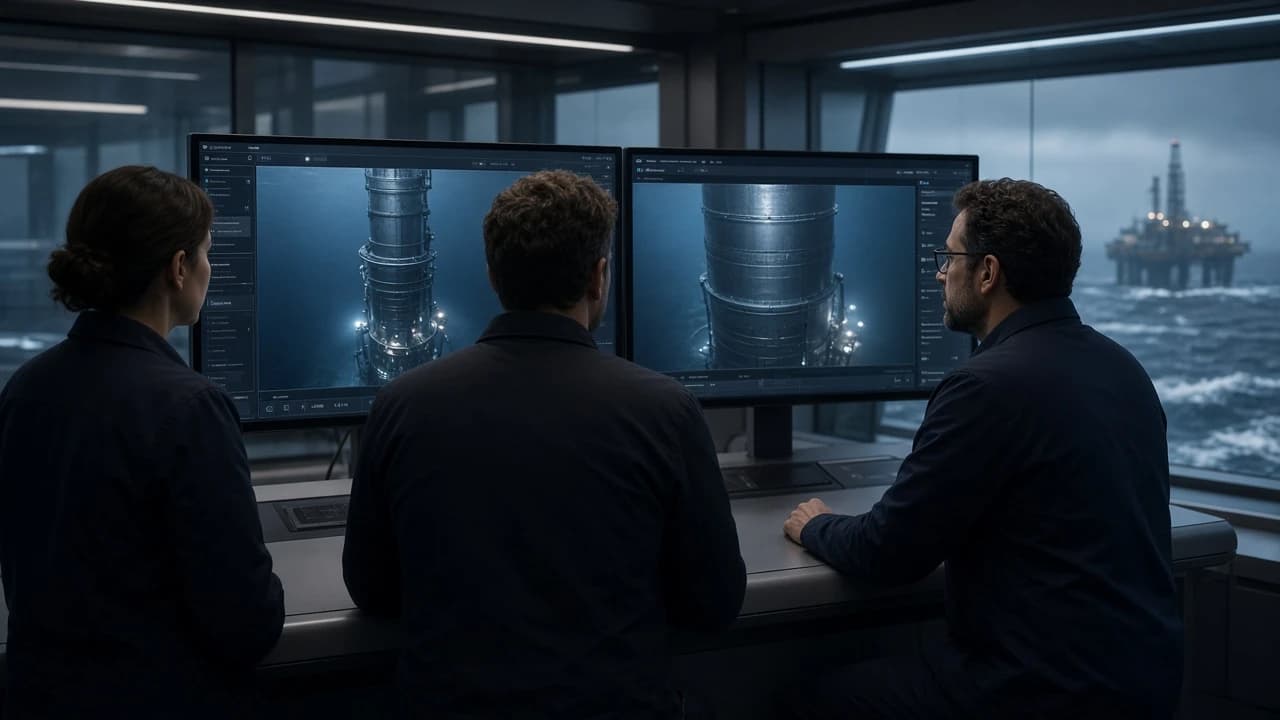
Rig owner
12:00 UTC+02:00
“We’ll address this during the next scheduled repairs.”
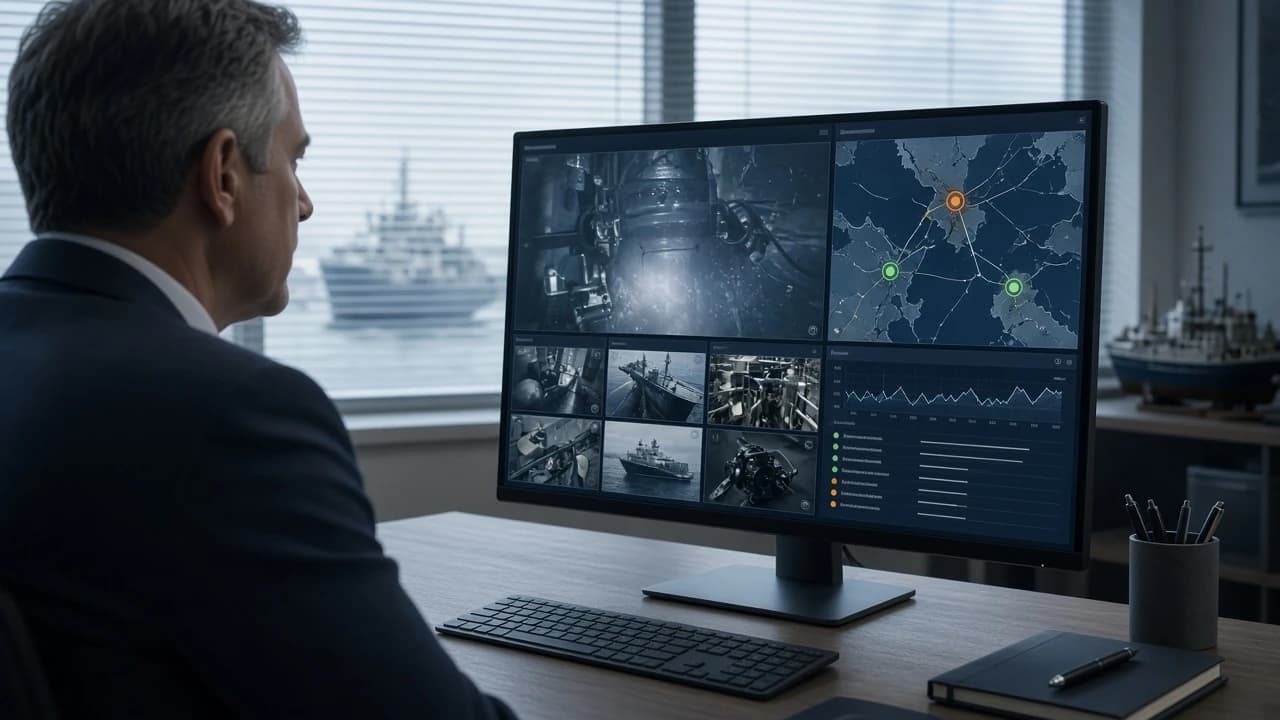
Classification society
18:00 UTC+08:00
“We must assess the damage before operations can continue.”
Oil company
10:00 UTC+00:00
“What does this mean for safety and continued operations?”
Insurance
11:00 UTC−04:00
“Did you record more video during or immediately after the incident? Do you have more logs from ConnectPoint?”
Concept illustration (AI-generated), built on the 1997 incident. The same damage — the column below the crane — seen at the same moment by the crew, the rig owner, the oil company, the class society and the insurer.
Part 1 is documented and can be verified. Part 2 is my own experience — it is mine to tell, and it is not written down anywhere else.
John Gunnar Haugenes · ConnectPoint
From that day forward
See how ConnectPoint binds time, place and identity into a sealed inspection record — or talk with us about a demo.