#01Trade Finance & Commercial Buyer
Cargo Inspection for the Buyer Before Payment or Container Closing
Cargo inspection for the buyer: watches live or receives sealed recording before payment or container closing.

Items marked [Approval: Flag State / Class] depend on acceptance by flag states, classification societies, statutory authorities, customs, or inspection bodies today.
Acceptance is decided case by case by flag states, classification societies and authorities. ConnectPoint equips owners, operators, and surveyors with the cryptographic proof required whenever remote witnessing is submitted for validation.
Keep a sealed, checkable record from factory loading to terminal gate, customs and discharge.
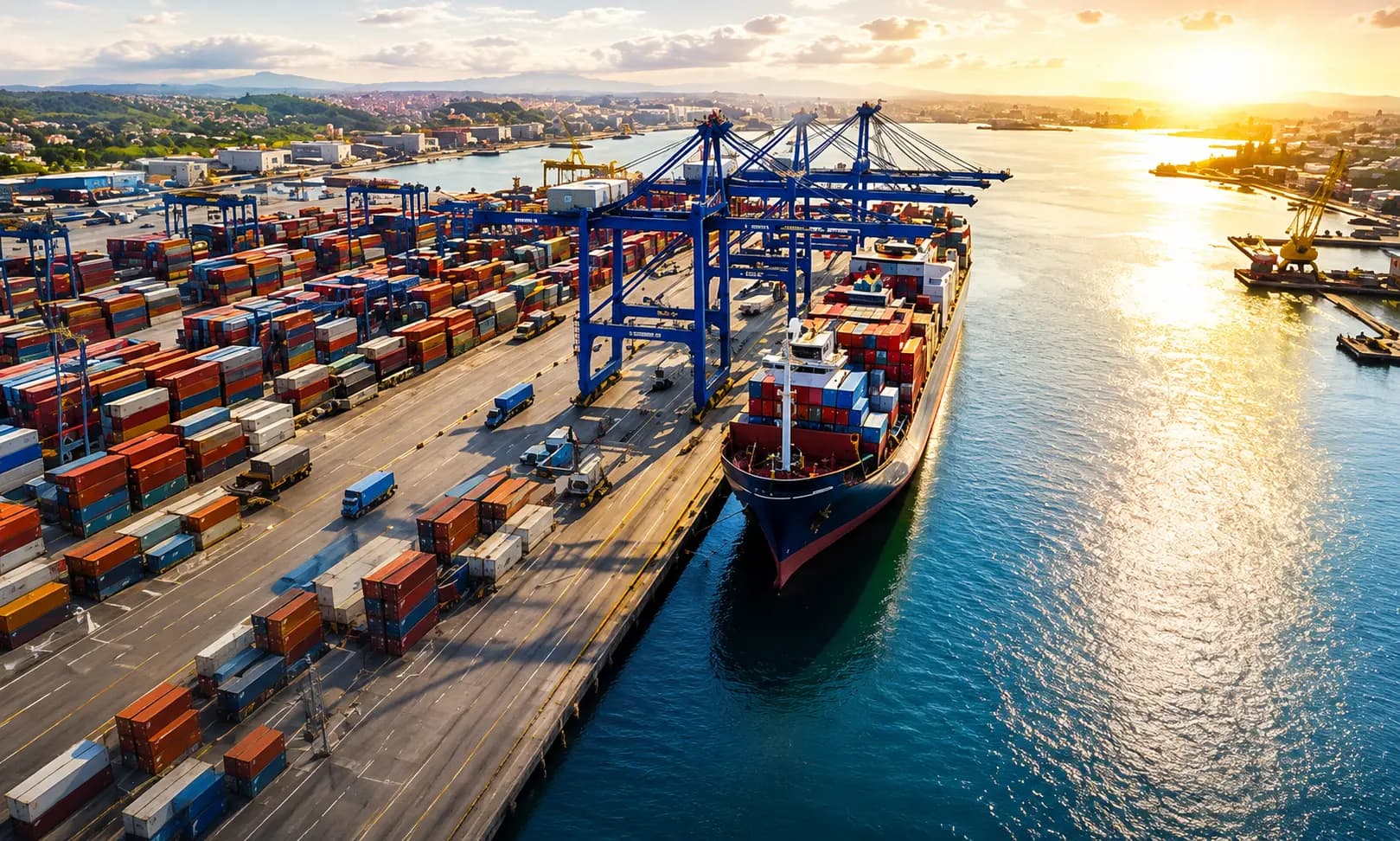
Cargo inspection for the buyer: watches live or receives sealed recording before payment or container closing.
Packing with sealed evidence: empty container check, loading process, seal placement and seal number all recorded in one chain.
Seal check on arrival: recording compared with departure recording to prove seal has not been broken.
Customs opening: documenting the opening of the container at customs inspection, condition of cargo and seal before and after.
Rip-on / rip-off: proof container was clean at closing; proof that narcotics/contraband was placed inside without the sender’s knowledge.
Innocent consignee: documentation protecting honest buyers and forwarders when contraband is found.
Empty container checks: roof, floor, walls, reefer machinery compartment, ventilation openings.
Damage at handover: damage to container or seal at gate, rail terminal, barge, deepsea terminal with exact attribution to party in custody.
Cargo damage: documenting condition at loading, at quay, after sea voyage, on delivery to prove where damage occurred.
Tailgate inspections: tank containers, dangerous goods (IMDG), ADR transport; condition of valves, flanges, labeling documented.
Legitimate importers: proving that their supply chain is clean from packing to arrival.
Customs support: customs services use ConnectPoint recordings from the private side alongside their own scans.
Police and investigators, for example the Dutch fiscal investigation service (FIOD) and the Rotterdam port anti-smuggling team (HARC): a complete package with hash, time, device ID and video handed over to the investigation.
Scene documentation: break-ins, damage to quay, cranes, equipment, sabotage recorded immediately after the incident.
Specialist support for police: engineer, chemist or diver advises police officers live via video connection.
Corruption in ports: independent recording of opening, sealing and handover makes manipulation and unauthorised access easier to detect.
Piracy, theft, stowaways: documenting what happened, what was stolen, how entry was gained with fast evidentiary log.
Damage to vessels at berth: damage caused by fenders, quay, crane or other vessel documented before lines are cast off.
Vessel inspections for charterers and ports (vetting): conducted partly remotely.
Status note: Governed by charterer vetting criteria and RightShip / CDI inspection frameworks.
Fisheries: landing control, catch species and weight documented via sealed video for fisheries inspection.
Status note: Statutory landing oversight subject to national fisheries authority remote regimes.
Ro-Ro and vehicles: documenting condition of new and used vehicles at loading and discharge to prevent claims.
Bulk and project cargo: draft survey, sampling, lashing and securing recorded with sealed log.
Remote inspection support for customs control – subject to the authority's acceptance. Not approved today.
Status note: Requires customs authority authorization under pilot schemes or authorized economic operator regimes.
ConnectPoint is software. It runs on standard equipment from Samsung, DJI and Starlink. The only hardware we make ourselves is the mobile Wi-Fi point for tanks and holds. Use cases below show how sealed records support remote inspection across maritime, offshore, ports and wind.